REBL: Telehealth Product Launch Architecture
Engineering the asynchronous intake and patient portal infrastructure for a fully digital medical practice.
- Role
- Lead Product Designer & Frontend Developer
- Timeline
- Nov 2025 – Apr 2026
- Stack
- Next.js, Sanity CMS, Clerk Auth, Vercel, Notion
## images

- 4 Weeks
- Velocity
- 33+
- Medications Modeled
- 2
- Systems Deployed
The Situation
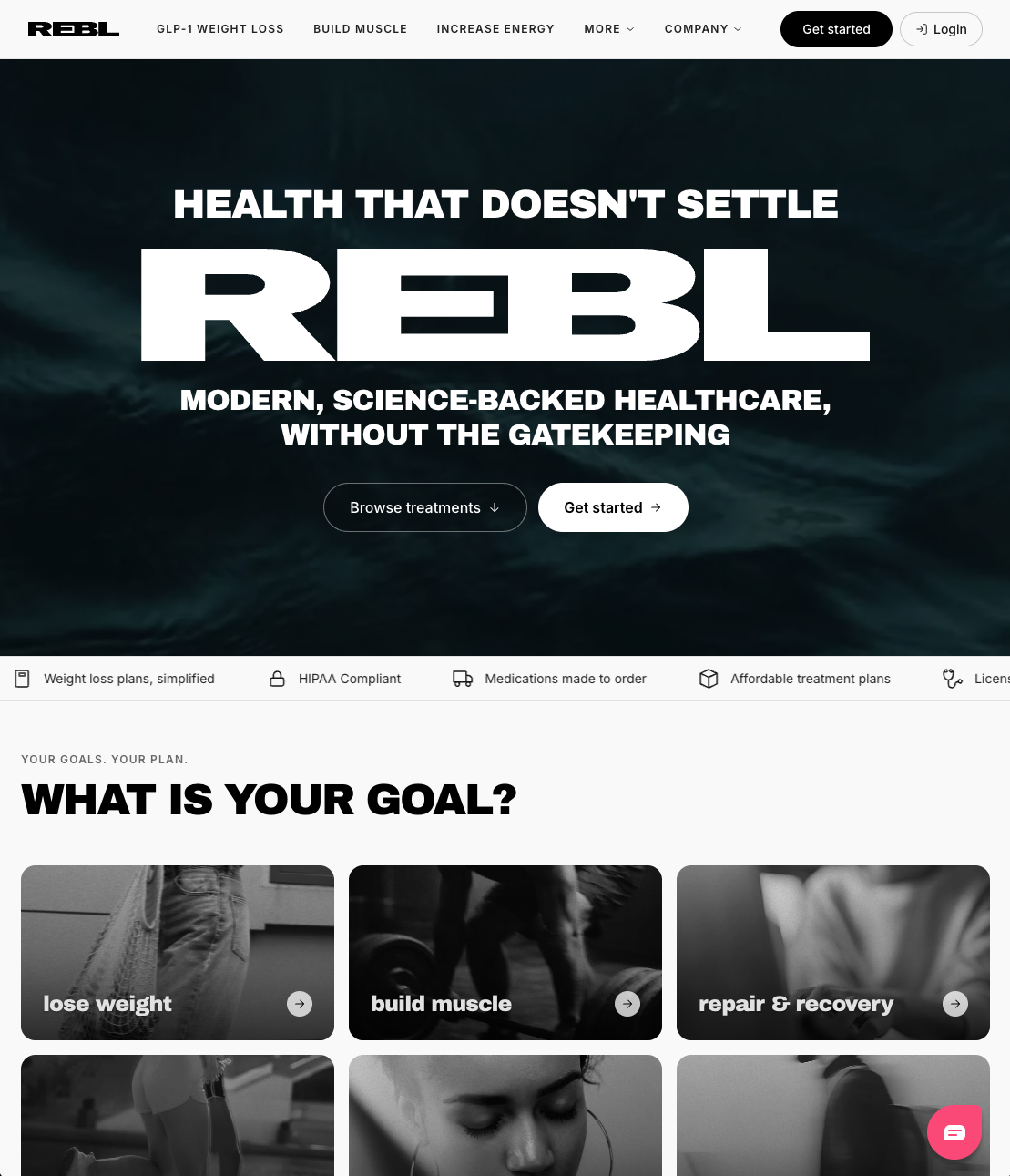
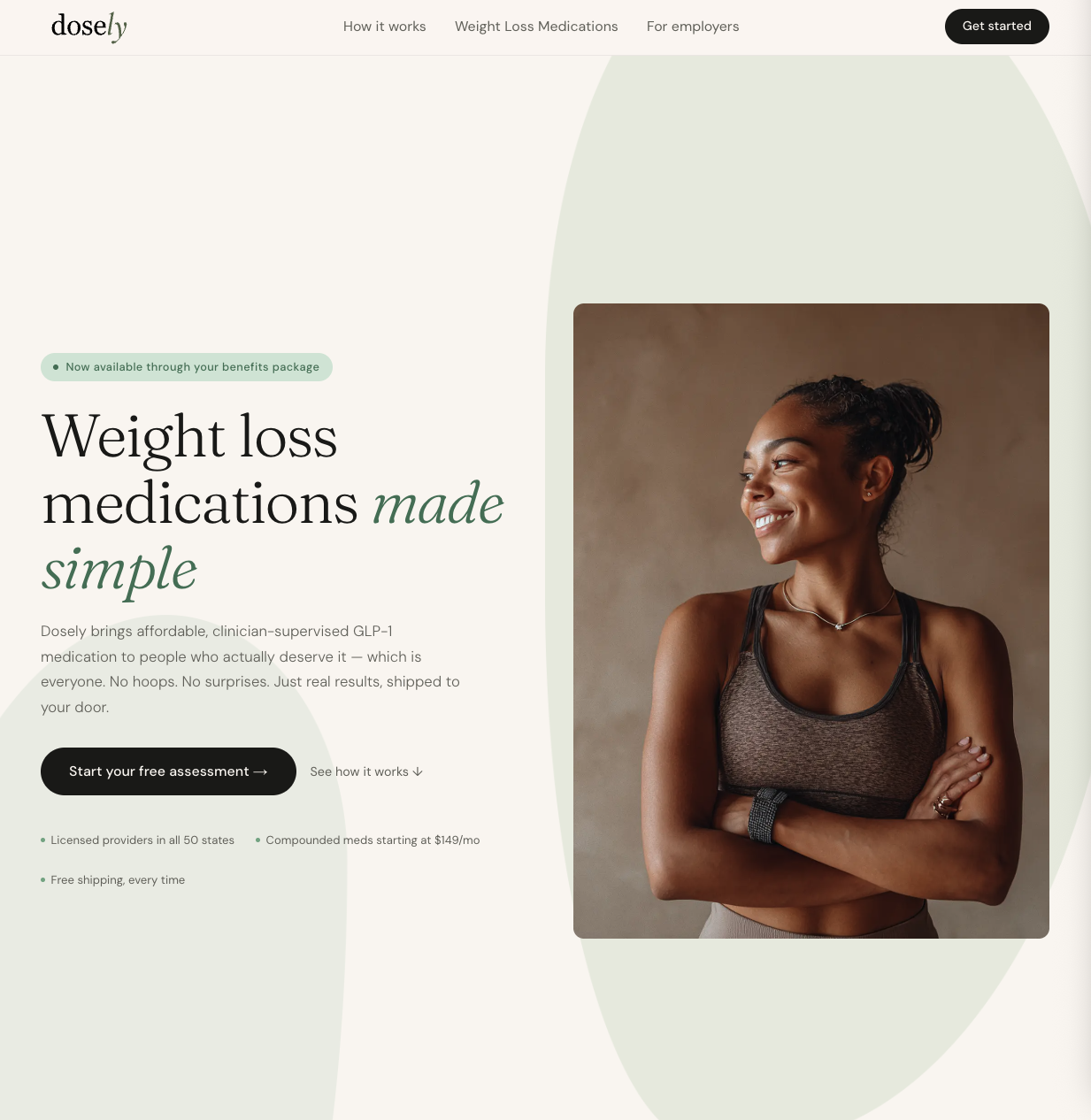
A rapid-growth telehealth startup needed to stand up a completely asynchronous clinical practice model but possessed zero patient-facing product infrastructure. There was no client authentication loop, no compliant patient portal, and no mechanism to display clinical treatments or initiate async medical assessments.
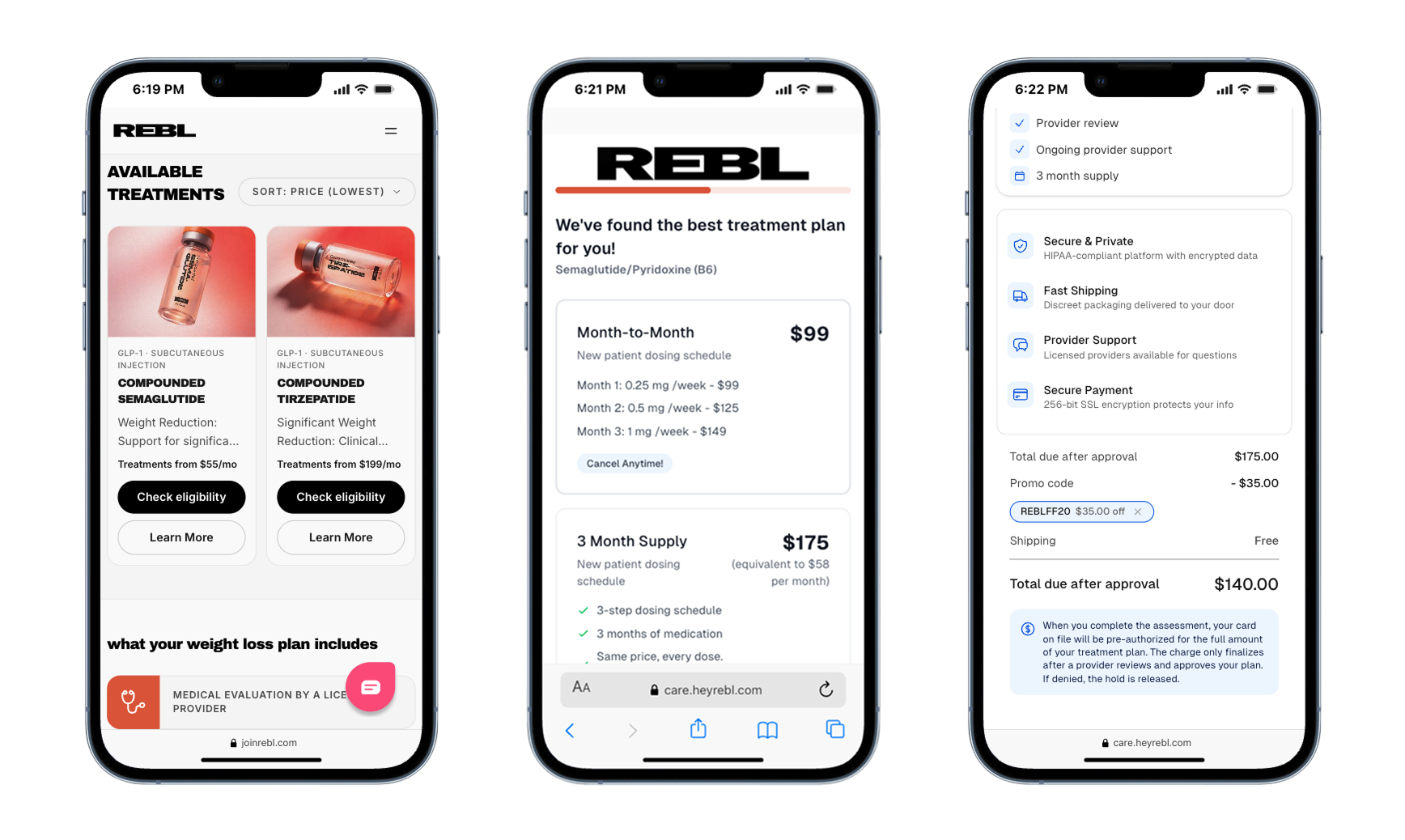
Joining as an independent product engineer, my objective was to define, design, code, and deploy the entire patient entry pathway (joinrebl.com) and connect it securely to the backend assessment framework (https://heyrebl.com) within an aggressive four-week window.
Product Architecture & Schema Design
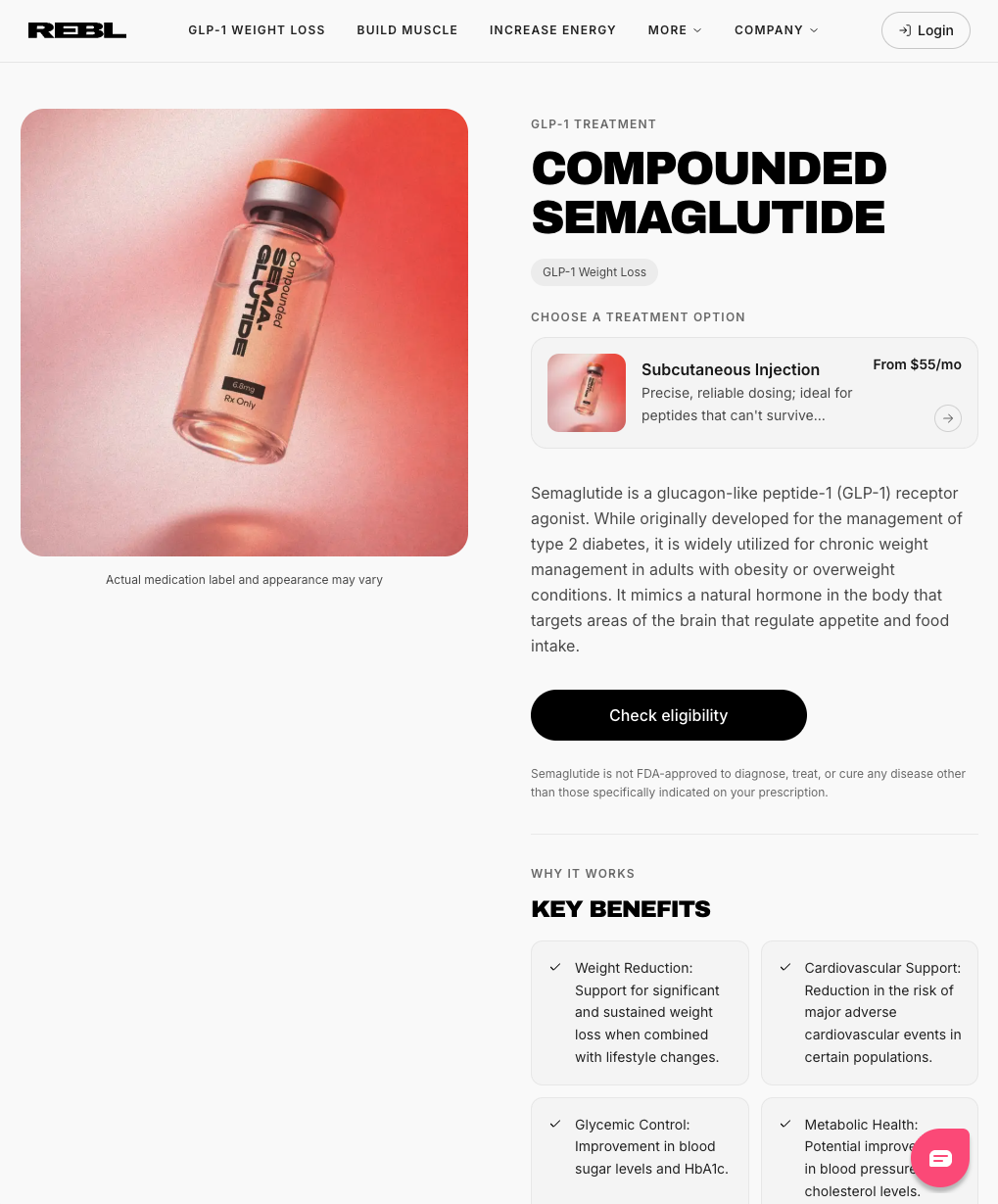
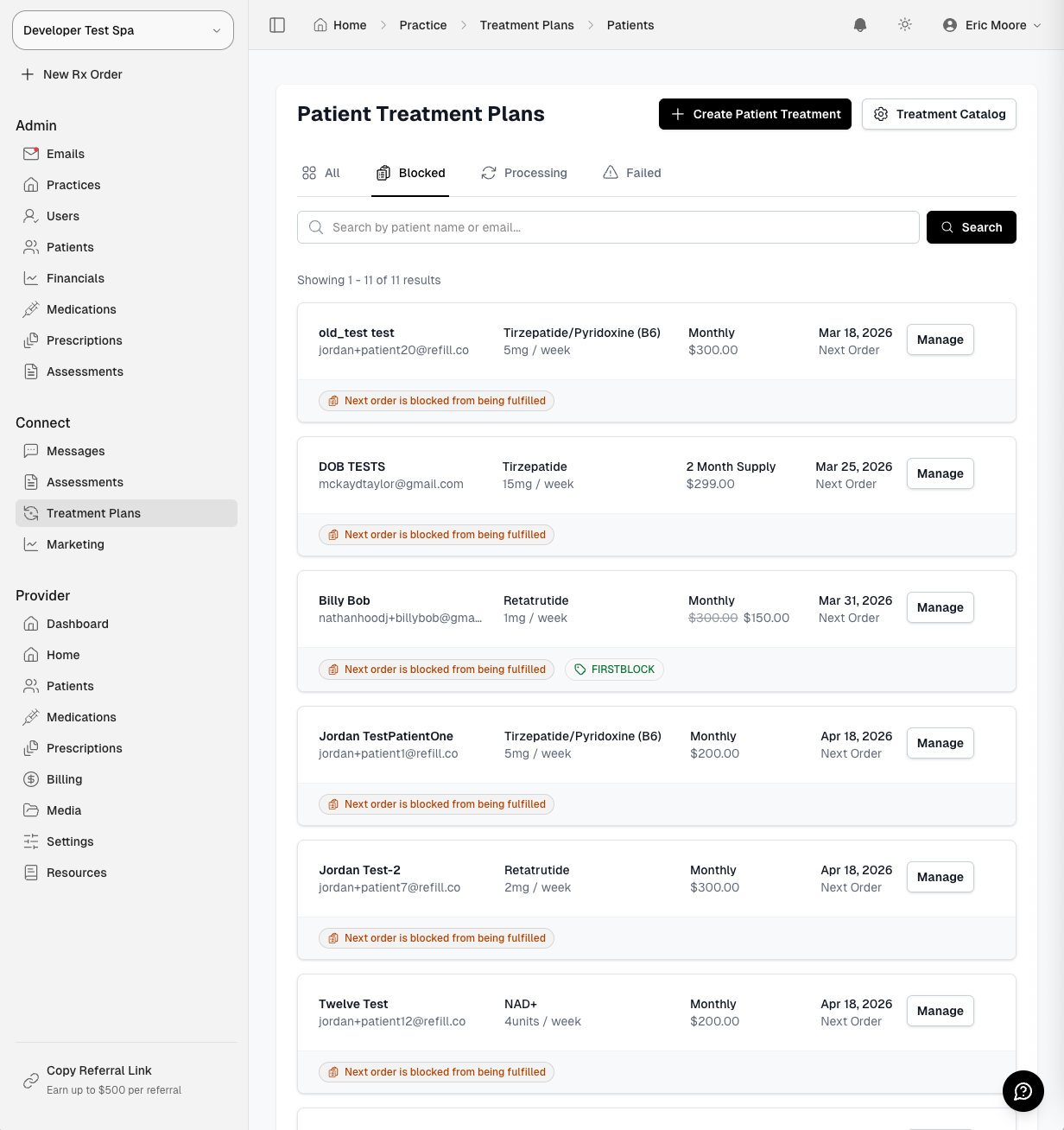
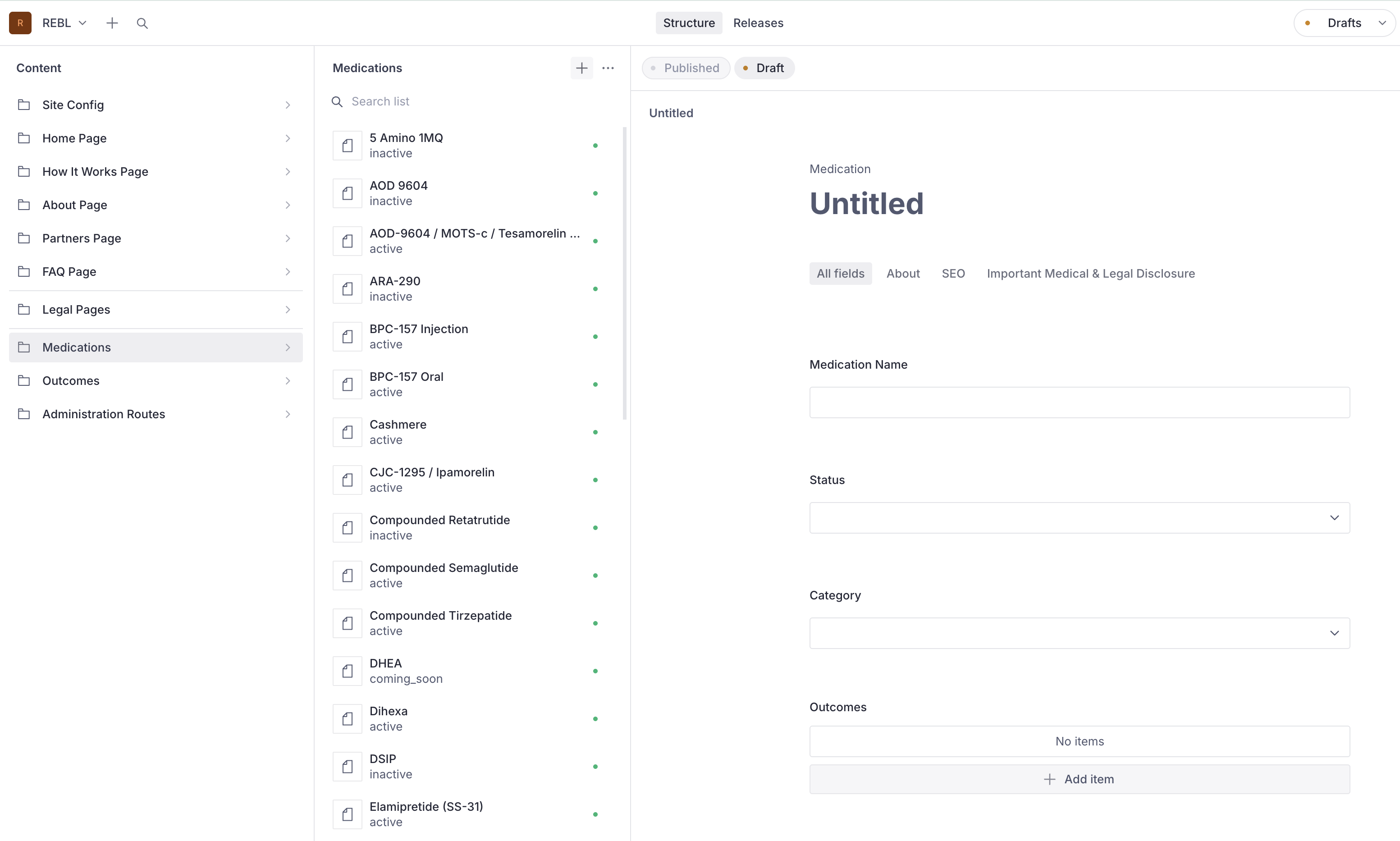
While early interface iteration began inside Framer to align stakeholder visual expectations, the platform required complex relational capabilities that visual builders could not scale: custom medication attributes, clinician-edited protocol constraints, and multi-state variant pricing.
The application was built from the ground up utilizing a Next.js framework with Sanity CMS acting as the dynamic, headless content model layer.
// Sample Relational Schema Architecture for Clinical Protocols
export default {
  name: 'medication',
  type: 'document',
  fields: [
    { name: 'name', type: 'string', title: 'Medication Name' },
    { name: 'category', type: 'reference', to: [{ type: 'category' }] },
    { name: 'compoundingPharmacyFlags', type: 'array', of: [{ type: 'string' }] },
    { name: 'patientEducationText', type: 'markdown' }
  ]
}
Try the model below: pick a category and medication, toggle flags, and watch the document update. (Illustrative mock data.)
{
  "_type": "medication",
  "name": "Protocol A",
  "category": {
    "_ref": "metabolic"
  },
  "compoundingPharmacyFlags": [
    "compounded",
    "refrigerate"
  ]
}
The Synchronized Clinical Pipeline
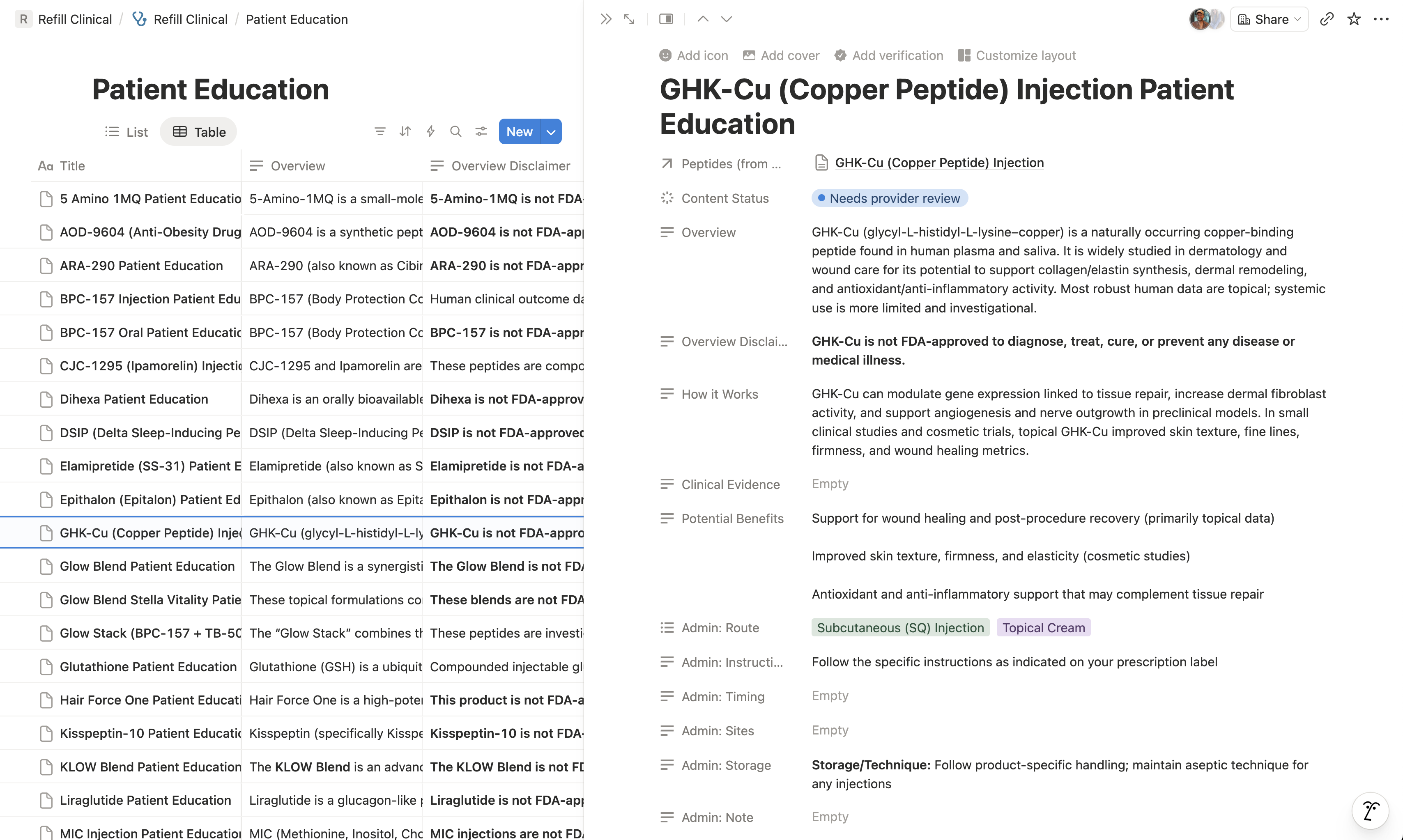
To accommodate non-technical medical staff and clinical directors, I engineered a bidirectional data-modeling bridge using Notion and Sanity CMS:
- The Editorial Layer: Clinical staff review, annotate, and update medication compound metrics, safety flags, and treatment plans within a highly structured Notion database.
- The Source of Truth: These relational content entries map directly to the Sanity schema layout, which dynamically compiles and renders optimized, high-fidelity static pages inside the Next.js runtime environment.
Growth Engineering & Attribution Tracking
To preserve business intelligence and maintain crisp marketing attribution across separate application layers, I engineered a secure UTM tracking pipeline across the platform's domain boundaries:
Traffic Source (Referral Link) ──> joinrebl.com (Next.js Domain)
                                         │  (Preserve UTM Parameters)
                                         ▼
https://heyrebl.com <── [Completed Async Intake Assessment]
This tracking architecture ensured that partner referral networks, provider affiliations, and campaign metrics accurately mapped all the way through to completed clinical intakes without dropping analytical signals during cross-domain session updates.
Production Outcomes
- Rapid Market Entry: Successfully engineered, integrated, and deployed a secure, production-grade asynchronous telehealth interface from blank canvas to live execution in exactly 28 days.
- Scalable Architecture: Structured a 100% template-driven application workspace; internal clinical teams can introduce new treatment categories and partner medical portals on demand via the headless CMS without requiring additional engineering support.
- Extensible Data Portability: Designed the underlying schema rules explicitly for future system migrations, allowing internal development teams to cleanly export the data model out of third-party CMS architectures into native databases when infrastructure scales.
[ View System Tokens ]
:root {
  --background: #fafafa;
  --foreground: #232221;
  --muted: #706d68;
  --rule: #e3e0db;
  --surface: #f2f2f2;
}

[data-theme="dark"] {
  --background: #191919;
  --foreground: #e4e4e2;
  --muted: #979693;
  --rule: #2f2f2f;
  --surface: #121212;
}

@theme inline {
  --color-background: var(--background);
  --color-foreground: var(--foreground);
  --color-muted: var(--muted);
  --color-rule: var(--rule);
  --color-surface: var(--surface);
  --font-sans: var(--font-inter), ui-sans-serif, system-ui, -apple-system, "Segoe UI", sans-serif;
  --font-mono: ui-monospace, SFMono-Regular, Menlo, monospace;
}